

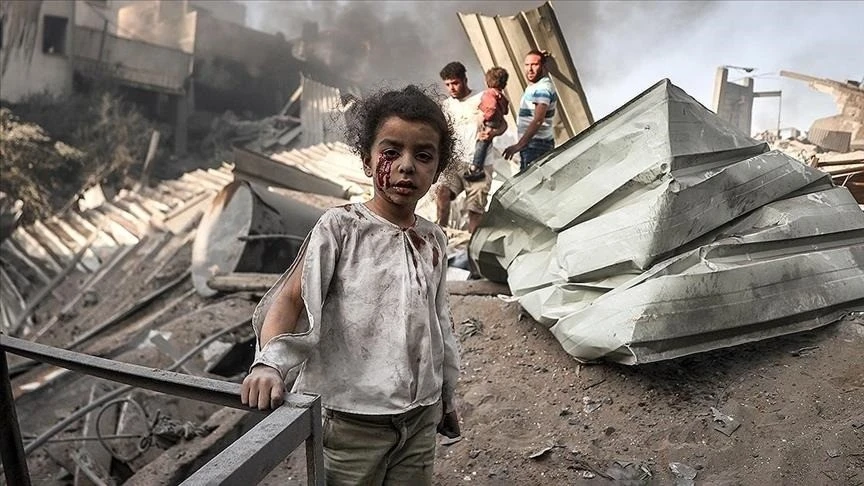
The dimensions of the ongoing conflict in Gaza should be understood not merely as a regional dispute between Israel and Palestine but as a global issue that directly affects international security and leads to profound human rights violations. Israel’s military operations in Gaza—marked by high civilian casualties, blockade policies, and restrictions on basic humanitarian needs—have consistently been reported by the United Nations (UN), Amnesty International, and Human Rights Watch as violations of international law (Karimy & Safaei, 2024). Yet the limited sanctioning capacity of international organizations, combined with the unconditional support of the United States, has rendered the establishment of justice and peace in the region virtually impossible.
Historical Background and Roots of the Conflict
The origins of the Israeli-Palestinian conflict date back to the Nakba of 1948, when Israel was founded and hundreds of thousands of Palestinians were displaced. Following the Six-Day War in 1967, Israel’s occupation of Gaza and the West Bank further curtailed the Palestinian people’s right to self-determination (Domi & Lata, 2025). Although Israel withdrew militarily from Gaza in 2005, it has continued to maintain political, economic, and military control. Consequently, Gaza has become one of the most densely populated and isolated territories in the world, where the blockade has deepened an ongoing humanitarian catastrophe. Israel’s land, sea, and air blockade cannot be justified solely on security grounds; rather, it constitutes a form of collective punishment, which amounts to a violation of international law (Alsharawnah, 2025).
Israel frequently legitimizes its operations in Gaza under the rhetoric of “counterterrorism.” Yet the disproportionate targeting of civilians, alongside the destruction of health infrastructure, schools, and UN facilities, constitutes acts that qualify as “war crimes” under international humanitarian law (Karimy & Safaei, 2024).
According to reports by Human Rights Watch, Israel’s use of indiscriminate bombardment methods violates two fundamental principles of the laws of war: the protection of civilians and the principle of proportionality. Moreover, the prevention of access to electricity, water, and medicine in Gaza has surpassed the threshold of a “humanitarian disaster” and entered the category of systematic human rights violations.
Although the United Nations, the European Union, and the International Criminal Court (ICC) have documented Israel’s violations and, in some instances, issued condemnations, the absence of effective enforcement mechanisms has created a profound vacuum in the international system. Most notably, the U.S. veto in the UN Security Council has enabled Israel to evade accountability (Domi & Lata, 2025).
The ICC’s investigations into potential war crimes, meanwhile, have been delayed under intense political pressure, exposing the dysfunctionality of international law. In this regard, the Palestinian question represents one of the most striking examples of the selective application of international justice.
The United States remains one of the most decisive actors in the perpetuation of the conflict through its diplomatic, military, and financial support to Israel. By continuously invoking Israel’s “right to self-defense,” Washington has shielded Tel Aviv from virtually all international pressure (Alsharawnah, 2025).
This stance affects not only regional balances but also the architecture of global security. The West’s insistence on human rights and international law in the context of the Ukraine war, contrasted with its inconsistency on Gaza, has entrenched perceptions of double standards. This inconsistency has fueled anti-Western narratives worldwide and created diplomatic openings for actors such as Russia and China.
Russia, for instance, has sought to position itself as a mediator in regional security—illustrated in the case of the Azerbaijan-Armenia conflict—yet its broader Middle East policy, particularly in Syria, remains rooted in military interests. In the case of Gaza, Moscow has adopted a critical stance toward the West, highlighting U.S. double standards. Still, the repeated failure of peace initiatives in the region underscores a central truth: that international actors are guided less by a vision of peace than by their own geopolitical calculations.
Gaza Through the Lens of Human Rights Violations
The blockade has severely restricted access to healthcare, disproportionately impacting women and children and, in some instances, amounting to acts that approach the UN-defined category of “crimes against humanity” (Karimy & Safaei, 2024). The ongoing trauma experienced by children, the systematic disruption of education, and the intergenerational cycle of poverty and hunger reflect the collective failure of the international community.
Far from being a mere regional crisis, the war in Gaza constitutes a direct challenge to global security. Its continuation fuels radicalization, triggers refugee flows, and undermines the internal stability of neighboring states (Domi & Lata, 2025).
Israel’s reliance on military force as the cornerstone of its security strategy lacks any long-term vision for resolution. This approach perpetuates a cycle of violence and sidelines the broader dimension of “human security.”
Ultimately, the conflict in Gaza has become a litmus test for the sincerity of the international community. The United States’ unconditional support, the impotence of international organizations, and the geopolitical maneuvering of other great powers have condemned the people of Gaza to a relentless cycle of violence. This reality calls into question the legitimacy of both international law and the global security order.
It is no longer sufficient for states to merely declare that “Gaza is not alone.” The absence of decisive intervention in the face of Israel’s actions has effectively legitimized the occupation and deepened the scale of atrocities. A collective, urgent, and effective response grounded in international responsibility is no longer optional but imperative. The treatment of civilians in Gaza amounts to “systematic violence” and “collective punishment” under the framework of international humanitarian and human rights law. These practices echo the darkest chapters of human history, reproducing a mechanical system of violence that negates the most fundamental right to existence.
The fact that a nation once subjected to genocide now inflicts systematic oppression on another people under similar justifications reflects a profound historical and legal contradiction. Israel’s effort to absolutize its occupation under the guise of “self-defense” epitomizes the selective application of international norms. Moreover, this rhetoric instrumentalizes the universality of human rights, severely undermining the legitimacy of the international order itself.
No comments yet. Be the first!