

The anarchic structure of the international system compels states to act under a constant sense of threat; this, in turn, brings about dynamics such as rearmament, the search for new alliances, and the development of strategic partnerships. Within this framework, states are prompted to not only take measures against existing threats but also exhibit a reflex of preparedness against potential risks; sometimes, this process may even extend to the construction of new enemy definitions through the creation of the “other.” This dynamic brings with it a structural issue defined in the literature as the “security dilemma.” Steps taken by one state to increase its own security are perceived as threats by other states, triggering a spiral of reciprocal armament. However, the threat perception established during this process, and the concurrently expanding security bureaucracy, may undermine the rational decision-making capacity of states; at times, strategic calculations are replaced by excessively securitized reflexes. Indeed, modern warfare has a multi-layered and multi-dimensional structure. For states to be able to protect their borders, it is essential to possess a strong military organization; yet, beyond quantitative size, the qualitative capacity of this organization is also of great importance. Modern armies consist of personnel who can adapt to advanced technology, possess field experience, have strong terrain dominance, and are skilled in strategic analysis and critical thinking. In this respect, contemporary military structures, unlike traditional armies, operate within a more analytical and holistic strategic framework.
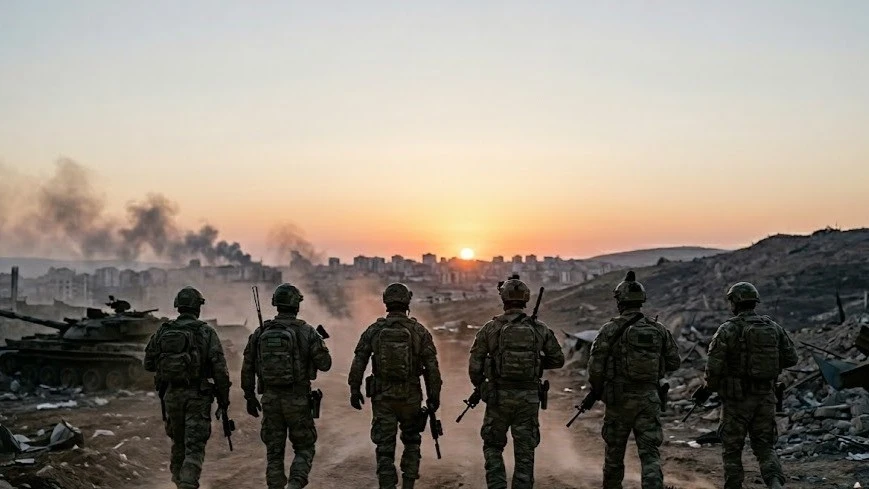
In this context, intelligence is one of the fundamental elements that enhances the multiplier effect of military efficiency. The capacity for qualified intelligence is a critical factor that directly affects operational success. Nevertheless, even systems based on high technology and strong intelligence networks do not eliminate the determining role of the human element inherent in ground operations. Ultimately, especially in conventional wars, the final stage is determined by military personnel who demonstrate a physical presence on the battlefield. Therefore, possessing trained, well-equipped, and highly adaptive military personnel is a decisive factor for states not only in terms of military success but also deterrence and international image. However, by the nature of war, this human resource constitutes the most fragile element. Vulnerabilities emerging during ground operations lead directly to personnel losses; these losses create not only military but also social and psychological consequences.
At this point, the cost of war acquires a multidimensional character. Military losses are not limited to personnel killed in action; injuries, permanent disabilities, and post-war rehabilitation processes also become long-term economic and social burdens for states. This indicates that the war economy should be evaluated not only in terms of short-term military expenditures but also alongside long-term social policy costs. Indeed, the Russia-Ukraine War offers a concrete example where these multidimensional costs can be observed. The prolonged duration of the war has led to significant personnel losses, economic attrition, and the erosion of military capacity for both sides.
Similarly, the dynamics of conflict in the Middle East reveal the unpredictability of war and the limitations of planning processes. Especially in the case of Israel's mandatory conscription system and the integration of wide segments of society into the military structure, while this provides high mobilization capacity, it also brings problems such as personnel shortages, limited training periods, and operational fatigue in prolonged conflict environments. Training qualified military personnel requires a specific level of time and discipline; accelerating this process can have negative effects on performance in the field.
On the other hand, as seen in the case of Iran, states with historical experience of war and those investing in asymmetric capabilities can display greater resistance to external interventions than expected.
This demonstrates that technological superiority alone is not sufficient in modern warfare; strategic culture, societal resilience, and long-term conflict experience are also decisive factors. In conclusion, when making decisions about war, states should address not only short-term military gains but also personnel capacity, economic costs, societal impacts, and long-term strategic outcomes in a holistic manner. While pre-war cost analyses are important, due to the inherent uncertainty of war, these calculations often do not align with realities on the ground. For this reason, the modern understanding of security necessitates a professional military structure that, instead of relying solely on technological superiority, integrates air, land, and naval forces in a balanced way, blending human capital with technology. Although unmanned aerial vehicles and advanced technological systems are transforming the nature of war, where these instruments become ineffective, the decisive factor remains the military personnel on the ground. This reality clearly shows that the human element maintains its central position in war.
No comments yet. Be the first!