

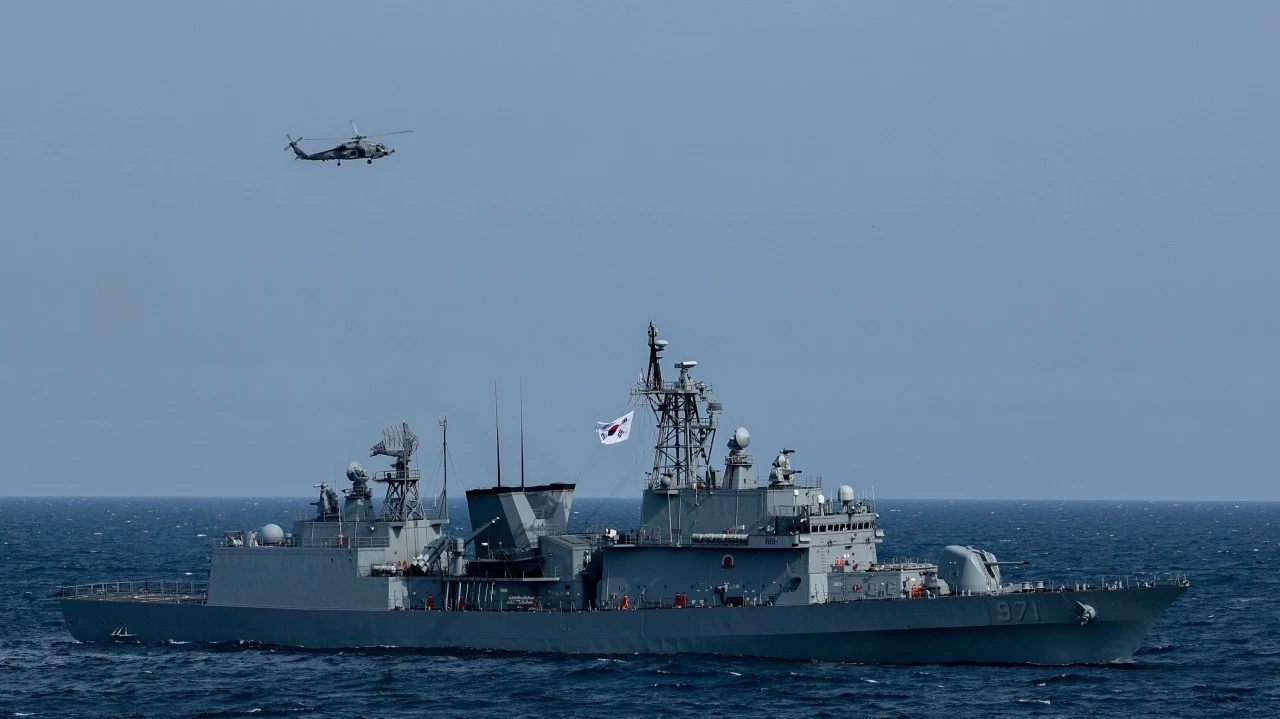
Following World War II, the United States' foreign policy has focused on maintaining global alliance networks and strengthening deterrence mechanisms against regional threats. These policies have prioritized the Indo-Pacific region due to economic and security concerns. The Indo-Pacific region is not only a crucial crossroads for global trade routes but also harbors multifaceted security risks such as China's growing influence and North Korea's nuclear program. In this context, the US aims to secure regional stability by deepening its alliance with South Korea. These new strategic moves demonstrate the US's emphasis on the Indo-Pacific region to counterbalance China's expansionist policies and provide robust deterrence against the North Korean threat. Securing sea routes and supply chains in the region is as important as preventing the expansion of actors like China and North Korea. In this context, the US's close cooperation with South Korea, defense agreements with Japan, and military exercises with other partners in Asia are considered part of its intention to create a comprehensive deterrence network. One of the most obvious examples of this strategic approach of the US-South Korea alliance on the ground is the Ulchi Freedom Shield (UFS) exercise.[1] UFS is defined by an integrated “all-domain” concept that includes modern battlefields such as cyber and space, beyond land, air, and naval forces. The aim of this annual joint exercise is to create an integrated operational environment between the US and South Korean armed forces and to strengthen the bilateral defense posture. During the exercise, different scenarios are experienced in live, virtual, and tabletop environments; thus, the goal is to be prepared against both conventional and hybrid threats. For example, in the 2025 exercise, experiences gained from conflicts such as the Ukraine War and the Israel-Iran tension were integrated into the program to simulate the multi-component nature of modern warfare.[2] According to official statements, Ulchi Freedom Shield aims to sharpen the allied forces in a “unified, joint, all-domain and inter-agency” environment, to strengthen mutual understanding, and to increase the alliance’s intervention capabilities. Thus, the US aims to reinforce the binding nature of its alliance by transparently showcasing it through observer participation, and to demonstrate that deterrence under “democratic observation” is ongoing. The concept of deterrence can be defined as the demonstration of a price or threat to make an adversary refrain from an unwanted action. From a traditional balance of power perspective, the superior military capabilities of the US and South Korea should deter North Korea from any attack, forcing it to “assess” its forces. The US nuclear umbrella and comprehensive warfare capabilities, including intercontinental ballistic missiles, theoretically support the deterrent effect on North Korea. At this point, Thomas Schelling's concept of “manipulation of risk” becomes important: Deterrence is not only about demonstrating a build-up of power, but also about clearly demonstrating a determined will to carry out this threat. Therefore, the adversary country needs to be genuinely convinced that the threat will be carried out. Two methods generally stand out in deterrent strategies: deterrence through punishment and deterrence through prevention. In punitive deterrence, major sanctions or retaliations are promised in the event of an attack. For example, the message that the US will respond with nuclear weapons or severe sanctions in the event of a large-scale attack by North Korea is an element of this approach. In preventive deterrence, defense systems and preparations that make it difficult for the attack itself to succeed are emphasized. The US-South Korea alliance attempts to balance this dual deterrence strategy by both developing defense capabilities with large armies and creating strong retaliation capabilities. However, in practice, displays of military force do not always produce the desired deterrent results. Research and historical examples show that large-scale military exercises sometimes escalate tensions instead of deterring the targeted aggressors. The situation in North Korea is similar: Pyongyang frequently describes the exercises as "invasion rehearsals" and responds with military measures. For example, it has become commonplace for North Korea to conduct several ballistic missile tests in the weeks before joint US-South Korea exercises.[3] This situation can be considered a kind of security dilemma: both sides strive to enhance their own security, while the other side views this effort as an aggressive intention, and both sides escalate tensions in the region by taking further measures.[4] From a security dilemma perspective, the US-South Korea alliance aims to strengthen deterrence. The military preparations and exercises conducted by North Korea are causing concern in the country, and the Pyongyang regime is responding with its own military displays. The "attack first, then you're invincible" mentality of both sides continues to fuel the escalation of crises. Furthermore, the deterrence strategy, developed with due regard for the delicate balance of trust between major powers, can be misinterpreted by those outside the target group. For example, the US's recent increasingly competitive stance towards China and its "maximum pressure" approach against North Korea may unsettle some states in the region. These measures risk undermining the trust of US allies. India's rapprochement with China following news of increased tariffs serves as an example. Therefore, the tough stances the US adopts to strengthen its security guarantees may, on the other hand, erode stability within the alliance. This complicates conflict dynamics in a multipolar world. The North Korean regime, with its ideological foundations and national security perceptions, tends to view these exercises as a direct threat. Pyongyang views such maneuvers as a conspiracy against the regime's existence and does not hesitate to retaliate, asserting its right to maintain national integrity. For example, shortly before the announcement of the Ulchi Freedom Shield exercises in the summer of 2025, the North Korean Defense Minister described the exercises as "provocative" and warned of "negative consequences." The frequent overt threats made by North Korean leaders are actually aimed at intimidating their own public and their enemies. It is seen as a strategy used by the regime to demonstrate its tough stance and strengthen its hand at the international negotiating table. There are similar examples in history: for instance, the sinking of the South Korean warship Cheonan in 2010 and the firing of cannons on Yeonpyeong Island were serious provocations carried out by North Korea under economic or political pressure. On the other hand, when looking at relations between great powers, the limits of "hard power" are observed. Ahead of the planned Putin-Trump summit in Alaska in 2025, President Trump's comments suggesting that sanctions against Moscow were ineffective and that alternative approaches were needed demonstrated the emergence of differing voices in strategic thinking. Trump's rhetoric implies that sanctions do not produce direct results and that diplomatic avenues can be explored. This example has given rise to a critical perspective among some major powers regarding the rigid deterrence approach adopted by the US in the post-Cold War era. Therefore, this rhetorical confusion, oscillating between Western and Eastern-leaning leaders, has brought to the forefront the search for limited use of force or soft diplomacy instead of hard power. Analyses arguing that military exercises and displays of force are not deterrent but rather encourage escalation are gaining strength in this context. From an academic perspective, it is seen that the problem should not be evaluated solely in the context of North Korea; generally, "the definition of deterrence contradicts the security dilemma." As the number of exercises and threat messages increase, the target country may respond with greater armament and aggressive rhetoric. Therefore, any attempt to ensure security through military provocations risks triggering a spiral escalation.[5] Another issue is intra-alliance dynamics. Although the US justifies its exercises to build trust with its allies, the simultaneous economic sanctions and diplomatic stance it applies to these alliances can undermine this trust. While alliance members show solidarity with the US to maintain strong strategic partnerships, internal cracks may appear due to the US's tough stance on other issues. This situation can erode the allies' trust in the US and weaken strategic alignment, which is an indirect pillar of deterrence. In this context, multipolarity in the international arena should also be considered. The US strategy of cornering rivals such as China and Russia may push these powers to cooperate more closely with each other. For example, Russia's move towards a closer alliance with North Korea is part of its search for an alternative to the "American-centric" system through mutual support. Therefore, perceptions of conflict in the region often evolve into a multipolar power competition. Therefore, military exercises developing within the US-centered deterrence trajectory are actually increasing tensions between large-scale blocs. Although these exercises are expected to create a deterrent effect in the short term, in the long term, other sovereign states are likely to perceive these exercises as a threat. (North Korea openly claims that this is an exercise aimed at overthrowing its regime); a possible retaliation is anticipated.
In the event of an attack, stability in the region could be severely undermined. Keywords: US-South Korea Alliance, Ulchi Freedom Exercises, North Korea, Deterrence [1] United States Forces Korea, “Ulchi Freedom Shield – a combined, joint, all-domain, and interagency operating environment”, https://www.usfk.mil/What-We-Do/Exercises/Ulchi-Freedom-Shield/, (Accessed Date: 15.08.2025). [2] Simon Palamar, “Security dilemma on the Korean Peninsula. Asian Perspective, 33(1), 7–31.https://www.jstor.org/stable/42704638, (Access Date: 15.08.2025). [3] “South Korea, US militaries will stage large-scale drills this month to address North Korean threats”, AP News,https://apnews.com/article/south-korea-us-joint-military-drills-ulchi-north-korea-nuclear-23193fcdad2af7e1b9ae9a40f3b7396f, (Access Date: 15.08.2025) Terence Roehrig, “2Japan, South Korea, and the United States Nuclear.” Umbrella: Deterrence After the Cold War. Columbia University Press, 2017, pp.13-37. [5] Vito D’Orazio“War Games: North Korea’s Reaction to US and South Korean Military Exercises”,Journal of East Asian Studies12(2012), pp.275-294.
No comments yet. Be the first!