
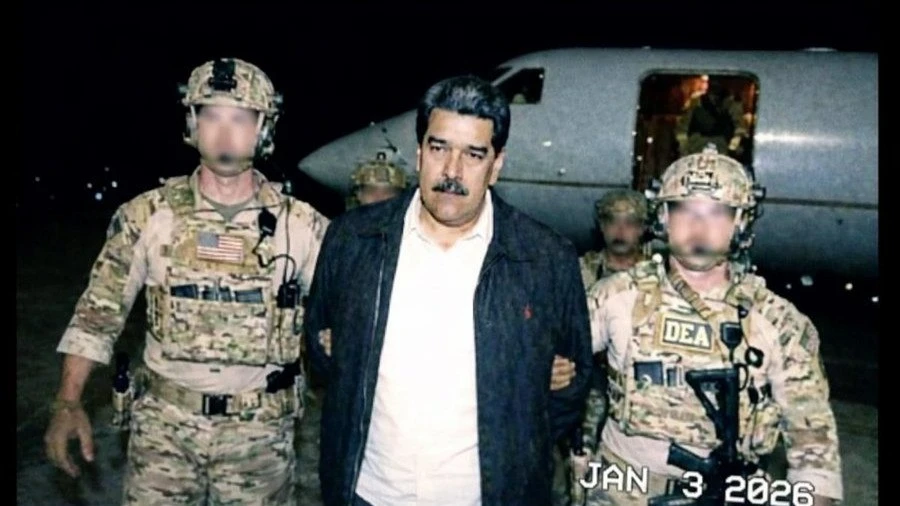
In international law, the fact that a sovereign state creates grounds for intervention by framing legitimacy debates over another sovereign state through the discourse of "terrorism" points to a profound erosion of the founding principles of the Westphalia system. Norms such as the sovereign equality of states, non-interference in internal affairs, and the prohibition of the use of force are increasingly being interpreted in a more flexible, selective, and instrumental manner through security-centered rhetoric.The US administration's detention of Venezuelan President Nicolás Maduro in a cross-border operation and bringing him to its own territory is a clear violation of sovereignty carried out under the banner of "combating narco-terrorism." The process we have witnessed as of January 3, 2026, represents a practice of power politics in which not only diplomatic conventions but also the law of nations have been effectively suspended. Donald Trump's characterization of a head of state as a "criminal who should be prosecuted" alongside data he presented on drug trafficking, coupled with the circulation of undiplomatic visuals, is part of a strategy of "public humiliation" that is becoming increasingly normalized in international relations. We are going through a period in which power establishes domination not only militarily and legally, but also on a symbolic and psychological level. What is even more critical is that the international system increasingly rationalizes such radical interventions as "necessary," "legitimate," and "inevitable." The promises of "bringing democracy," "restoring the oil infrastructure," and "management through companies" made in relation to Venezuela, which has the world's largest proven oil reserves of approximately 303 billion barrels, clearly reveal that the intervention is based on geo-economic interests rather than humanitarian reasons. This rhetoric confirms that the intervention is a strategic choice rather than a moral one. The models of "democracy export" and "post-conflict stability building" experienced in the Middle East and Africa have repeatedly demonstrated that externally imposed regime changes produce institutional weakness, political fragility, and chronic instability rather than peace. In the case of Venezuela, the people's right to self-determination is being systematically ignored; economic, political, and social crises are being used as a functional lever for military intervention. This approach contains an implicit message not only to Venezuela but to all political actors that do not demonstrate strategic alignment with the US: sovereignty is protected only for actors who are compatible with the system; non-compliance can be eliminated by bypassing legal processes. This situation creates an extremely dangerous precedent for the international order.
In conclusion, as in the case of Venezuela, no matter how professionally the rhetoric is dressed up, intervention in a state's internal affairs on this scale is unacceptable. Such initiatives carried out under the banner of "operation" are a direct violation of international law. The solution to the current economic and political crises cannot be left to the initiative of a foreign power, detached from the will of a sovereign people. Otherwise, this practice of intervention will herald a normative collapse that will make the global system not safer, but much more fragile.
No comments yet. Be the first!